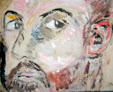
Charles Aznavour's autobiography, published in 1970, covers some fascinating ground. The child of Armenian immigrants to Paris, born in 1924, he came to show business early, performing in plays and music halls as a child. The section on how he and his family survived during the German occupation in World War II is full of compelling day-by-day detail. But the highlight of this volume must be his account of his time with Edith Piaf as her assistant and all-around doormat. There was true affection there on both sides, but Piaf was notoriously difficult. Much of the first half of the book is taken up with his songwriting rather than with his singing. Until he made his triumph as a singer, selling songs to other singers was his bread and butter. There's not much on Aznavour's film career, disappointingly, and nothing about his work starring in the Truffaut film Shoot the Piano Player.
Thursday, April 13, 2023

Me Tanner, You Jane
Lawrence Block goes wild in this installment of the Evan Tanner spy series. The sexual exploits would not pass muster in today's world, but the pacing will keep a reader eagerly flipping pages.
So Big
Edna Ferber's Pulitzer Prize-winning novel asks the question, How do you live a meaningful life? The main character, Selina DeJong, is a memorable and sincere seeker after beauty and meaning. (On her first trip to a farm, she finds the cauliflower beautiful, which sets the farmer to laughing.) Selina is skeptical of material success, which leads to a split with her son when he becomes a successful bond salesman. There is no whiff of cynicism or facile cleverness in this deeply felt and deftly expressed novel.
Tanner's Tiger
Lawrence Block's Evan Tanner – "the world's most unusual spy" – travels to Montreal and the '68 Expo to try to penetrate and defeat a scheme by Communist Cuba. It goes down smooth and leaves little aftertaste.
The Years
This is Annie Ernaux's longest and most comprehensive look into her life, starting at childhood and taking her to nearly 60. With the personal come commonplace observations about the world around her. Although I admire and respect all of the books I have read since hearing her name for the first time when she won the Nobel, I am about done with Madame Ernaux.
Giant
Edna Ferber's bestselling novel from the 1950s is an exploration and condemnation of the conquest of Texas by white families. The repeated "we do things differently here" theme gets a bit tiresome, and Ferber has a tic in which she strings together items in a series without commas, but overall this is a fine old-fashioned novel of manners with a splash of social criticism.
Thursday, March 9, 2023
Getting Lost
Annie Ernaux's diary of a yearlong affair with a Russian diplomat is repetitive and, for all its reputation for brutal honesty, at times reticent. Ernaux does put herself out there, it is true. In fact she often makes herself look pitiful pining for this man and hanging on his every phone call. The writer in her believes that nothing that is not written ever happened, but sometimes things happen that don't merit writing down. This is a case where a novelization of this affair would have been interesting, but Ernaux's colossal self-regard would not have it.
Survival of the Richest
Douglas Rushkoff's book is billed as a look at the "escape fantasies" of billionaires, but it's more helpfully a dissection of how the mindset of "move fast and break things" is ruining the planet. Like Sarah Kendzior's book They Knew, Survival demonstrates how all of the grand plans that billionaires have to save the planet leave 99 percent of the population behind. In both books, the great unwashed are shown to be little more than a nuisance to these men. Rushkoff explains that rather than fixing things incrementally and with a sense of modesty, hyper-libertarian tech bros must all start from zero (throw everything out) and go exponentially beyond any rational solution to the problem. Rushkoff leaves the reader with an ominous warning: "We've never seen a society avoid fascism when it gets to this stage of economic inequality, or civilization avoid collapse when it has taxed its physical environment to this extent."
Friday, February 24, 2023
The Leopard
Giuseppe Tomasi di Lampedusa's depiction of a decline of a way of life, and his explication of the Sicilian mind, are elegant and perceptive.
Masters of Atlantis
This Charles Portis novel has an overwhelming feel of being half-assed. The tone of winking satire becomes unbearable after a while.