Friday, January 27, 2012
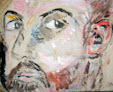
Public Enemies
The philosophy can be heavy sledding, but the biographical and literary discussions lighten the load in this exchange of letters between Michel Houellebecq and Bernard-Henri Levy.

Tuesday, January 24, 2012
Garden, Ashes
This largely plotless, biographical novel by Danilo Kis proceeds by means of dreams and indirect glances. The father is grandiose and manic; the son sensitive and worldly. Well-observed, complex characters are not always enough to sustain a novel. Here, they are.
Monday, January 16, 2012
The Physicists
Friedrich Durrenmatt's two-act play addresses the problem of scientific knowledge running ahead of the political and moral world's ability to integrate it. Three men in a madhouse believe themselves to be Newton, Einstein, and an interlocutor of King Solomon. Abstraction and absurdity are a potent mix.
Sunday, January 15, 2012
The Map and the Territory, Take Two
Here's my review of Michel Houellebecq's The Map and the Territory, published in the Tampa Bay Times:
Has Michel Houellebecq mellowed? The French novelist whose earlier works could strip paint with their scathing social commentary, explicit sex and crushing gloom takes up a brush instead in The Map and the Territory to paint a muted and glowing portrait of an artist.
Set mostly in the near future of around 2015, the novel follows the career of Jed Martin, a motherless, delicate and isolated French painter who makes his name, and the beginnings of his fortune, when he hits on the idea of photographing Michelin road maps. As the title of his exhibit explains, “The map is more interesting than the territory.” For Martin, beauty in art is secondary, although his photographs are hailed as such. Most importantly, he says, “I want to give an account of the world.”
That has also been Houellebecq’s work as a novelist, so when Martin needs text for an exhibition catalog, whom better to turn to than … Michel Houellebecq? The author winks from beyond the page when his fictional double first appears to modest praise from Martin’s father: “He’s a good author, it seems to me. He’s pleasant to read, and he has quite an accurate view of society.”
But it’s not all bouquets. At a meeting with Martin, the novelist “stank a little, but less than a corpse” and “looked like a sick old turtle.” Houellebecq complains that his life has become “one endless scratching session” because of his athlete’s foot. “I’m rotting on the spot and no one gives a damn.”
What could have been a gimmick is instead one of the most endearing aspects of this fascinating novel. Houellebecq and Martin become, as much as two isolated people can, friends. To pay him for the text, Martin paints a portrait of Houellebecq with wild voodoo eyes. It will eventually be worth 12 million euros.
Over the course of the novel the author sticks his nose into all kinds of subjects, from architecture, police work, bichons frises, gastronomy and the Pre-Raphaelites to euthanasia, consumerism (an “endless wandering between eternally modified product lines”), Audis and video equipment.
And Houellebecq hasn’t lost his touch with the one-liner. Martin finds one of his subjects as difficult to capture “as a Mormon pornographer.” A restaurant’s discreet waiters “operated in silence, as if in a burn unit.” Houellebecq himself (the fictional one) dismisses Picasso’s work as “priapic daubing.”
In a previous novel, Houellebecq wrote: “Anything can happen in life, especially nothing.” In this one, he writes: “It doesn’t amount to much, generally speaking, a human life.”
Houellebecq’s world is a gloomy old place, for sure, but there’s a measure of joy to be had in picking it apart and examining the pieces.
Has Michel Houellebecq mellowed? The French novelist whose earlier works could strip paint with their scathing social commentary, explicit sex and crushing gloom takes up a brush instead in The Map and the Territory to paint a muted and glowing portrait of an artist.
Set mostly in the near future of around 2015, the novel follows the career of Jed Martin, a motherless, delicate and isolated French painter who makes his name, and the beginnings of his fortune, when he hits on the idea of photographing Michelin road maps. As the title of his exhibit explains, “The map is more interesting than the territory.” For Martin, beauty in art is secondary, although his photographs are hailed as such. Most importantly, he says, “I want to give an account of the world.”
That has also been Houellebecq’s work as a novelist, so when Martin needs text for an exhibition catalog, whom better to turn to than … Michel Houellebecq? The author winks from beyond the page when his fictional double first appears to modest praise from Martin’s father: “He’s a good author, it seems to me. He’s pleasant to read, and he has quite an accurate view of society.”
But it’s not all bouquets. At a meeting with Martin, the novelist “stank a little, but less than a corpse” and “looked like a sick old turtle.” Houellebecq complains that his life has become “one endless scratching session” because of his athlete’s foot. “I’m rotting on the spot and no one gives a damn.”
What could have been a gimmick is instead one of the most endearing aspects of this fascinating novel. Houellebecq and Martin become, as much as two isolated people can, friends. To pay him for the text, Martin paints a portrait of Houellebecq with wild voodoo eyes. It will eventually be worth 12 million euros.
Over the course of the novel the author sticks his nose into all kinds of subjects, from architecture, police work, bichons frises, gastronomy and the Pre-Raphaelites to euthanasia, consumerism (an “endless wandering between eternally modified product lines”), Audis and video equipment.
And Houellebecq hasn’t lost his touch with the one-liner. Martin finds one of his subjects as difficult to capture “as a Mormon pornographer.” A restaurant’s discreet waiters “operated in silence, as if in a burn unit.” Houellebecq himself (the fictional one) dismisses Picasso’s work as “priapic daubing.”
In a previous novel, Houellebecq wrote: “Anything can happen in life, especially nothing.” In this one, he writes: “It doesn’t amount to much, generally speaking, a human life.”
Houellebecq’s world is a gloomy old place, for sure, but there’s a measure of joy to be had in picking it apart and examining the pieces.
Monday, January 2, 2012
Bookart #1

Tuesday, December 27, 2011
The Map and the Territory
The map — Michelin, blown up and manipulated by artist Jed Martin — is more beautiful, complex and profound than the territory itself, photographed from the sky. Martin says near the end of this Michel Houellebecq novel that he wants "to give an account of the world" with his paintings and photographs and, finally, videos. As in previous novels, Houellebecq delivers detours, shocks and gloom, but there is less explicit sex and random violence than before. It is a more autumnal, which is not to say mellow, Houellebecq.
Saturday, December 17, 2011
Death and the Penguin
The hapless man at the mercy of forces beyond his control -- and who isn't, really? -- always makes a good subject for fiction. Here, Viktor is a writer of advance obituaries in Kiev whose subjects compliantly perish. He has a pet penguin, takes care of an orphan girl, and conducts an affair with the girl's nanny. He also is being trailed by gangsters or government thugs or possibly both. Andrey Kurkov's novel captures the melancholy and hustle of the immediate post-Soviet years, with a splash of humor.
Wednesday, December 7, 2011
African Psycho
In African Psycho, the French Congolese novelist Alain Mabanckou follows an aspiring criminal plotting his first murder. Gregoire, an orphan who bangs out dents in car fenders when he is not prowling his run-down neighborhood, He-Who-Drinks-Water-Is-An-Idiot, is inspired by the nation's recently deceased and most notorious criminal, whose grave he visits for inspiration. There is something of the solitary, independent intelligence of the unnamed protagonist of Hunger in Gregoire. He is a political and social critic, a bit of a sex fiend -- an angry young man who yet appeals, as he must for the book to be a success. Mabanckou has written a fine novel of pungent satire wrapped in a thriller.
Wednesday, November 30, 2011
Horseman, Pass By
Larry McMurtry's first novel, watered down into the film Hud, can be a tough slog for such a short tale (179 pages in paperback). The repeated descriptions of sunlight and moonlight and dew wear thin as dressings for a bare trunk of story. The characterizations are sharp, however, and the set-pieces convincing.
Saturday, November 5, 2011
The Good Soldier
Ford Madox Ford's novel deftly peels away the layers of its characters until there is nothing left but a raw, usually ugly core. His metaphors and similes are memorable, as here: "Florence was a personality of paper ... she represented a real human being with a heart, with feelings, with sympathies, and with emotions only as a bank note represents a certain quantity of gold." And when he dilates on the human condition from the particular to the general, his conclusions usually strike a note of uncomfortable truth, as here: "But the real fierceness of desire, the real heat of a passion long continued ... is the craving for identity with the woman that he loves. He desires to see with the same eyes, to touch with the same sense of touch, to hear with the same ears, to lose his identity, to be enveloped, to be supported."
Subscribe to:
Posts (Atom)